

let's talk

Around the world for Modern Workplace at FOD BUZA
The essence
The Federal Public Service Foreign Affairs (FOD BUZA), Foreign Trade and Development Cooperation worked with an outdated ICT infrastructure that brought security risks and limited collaboration possibilities. Moreover, there was no consolidated way of working, with inefficiency and dissatisfaction as a result. To let everyone in the department work in a uniform and modern way, the Microsoft 365 Modern Workplace was implemented. The goal? To increase the digital fitness of employees and optimise daily work. With a flexible team, a lot of travel and a people-centric approach, after two and a half years we are wrapping up a great project, with an even better result.
Problem statement
FOD BUZA not only has offices in Brussels, but also countless embassies and consulates all over the world, with around 3000 employees in total. They each worked in a different way and with outdated technology. Digital maturity and a lack of uniformity was the cause of inefficiency and dissatisfaction. The idea of a clear digital workplace had been there for a long time, but for a professional approach they turned to Cronos Public Services. They found the right people for the project, including Kenny Van Dessel, our digital success manager.
Kenny: “We immediately got to work mapping out all the existing and above all missing workflows and tools. Microsoft 365 did exist within the department, but its use was not optimally exploited. Outlook was used for emailing and MS Teams for chatting. But OneDrive, SharePoint or any other way of data and information management was missing. Especially in the foreign consulates and embassies there was a big lack of digital maturity. That was certainly not always down to the people working there. One country simply has more resources than another and if you don’t have a uniform digital workplace, you have to fend for yourself.”
Project flow
Approach
Kenny: “During the project for FOD BUZA we invested a great deal in change management and adoption, putting the employees at the centre. As change & adoption manager I therefore also looked functionally at the employees. How do they carry out their tasks now? What are their work processes from A to Z and how can we improve that in terms of time and effort? The next step was to determine what knowledge of certain tools was needed to bring about that change.”
When all that had been mapped out, it was decided to roll out part of the MS 365 toolset: MS Teams, Outlook, OneDrive and SharePoint Online. This way the amount of new information was limited, and digital maturity could be built up step by step with careful guidance that allowed people to get started quickly.
- Manuals, video material and trainings were made tailored to the end user; these were gathered on the adoption hub site.
- Personal trainings to check whether everything is clear and everything works as it should.
- Follow-up to see that everyone feels comfortable within the new cloud environment with Teams and SharePoint Online as the centrepieces.
“We really had a valuable impact on people’s daily working life, and that is, after all, what I do it for.”
Kenny Van Dessel, change and adoption manager
Migration journey
Kenny: “In 2020 we wanted to start with a big bang in which one directorate in Brussels after another could be launched. The coronavirus crisis threw a spanner in the works, which meant we had to proceed very carefully and flexibly.”
After everyone within FOD BUZA in Brussels had been migrated, it was time for “the posts”, which turned out to be the biggest challenge.
“The posts are the foreign consulates and embassies. That was a wonderful opportunity, because I had to go abroad one week per month and thus ended up in some special places: Seoul, Tokyo, Cairo, Burundi, Ivory Coast, Pretoria in South Africa, Algeria, Kuwait, Abu Dhabi, Athens, Vienna, etc. That was a unique experience!”

The team consisted of around fifteen people who alternated for the foreign implementations. Each time two or three people went on a “migration mission”: someone for change management & adoption and trainings, and one person for the technical implementation such as installing printers, setting up a network and sometimes even providing cabling.
An implementation abroad took a short working week. Sometimes longer, if local services still had to help on site with, for example, sealing cabling. After a few days it was done and I could prepare the next implementation three weeks later.
The migration journey always looked the same:
- From Belgium, schedule the visit with the foreign embassy, taking into account coronavirus measures and diplomatic visits.
- Schedule all the separate sessions, from introduction to trainings.
- In addition to a completely new way of working, everyone also received new hardware: laptop, headset, and so on. This was sent via the diplomatic pouch.
- Two weeks in advance, the foreign employees were given the task of cleaning up all data. Whatever is outdated, duplicate or (has become) irrelevant must go. Because the more data to migrate, the longer it takes. “With a modern bandwidth in Europe a migration goes smoothly, but the bandwidth in Africa is a different story…”
- “We arrived on Monday, to immediately welcome the employees with the new equipment and an introduction session. After that we got to work on the trainings.”
- “I often gave those trainings in English, but sometimes also in French, Dutch and even in Spanish!”
- When everything is clear for everyone and all technical matters (e.g. printers) work, and there are no more questions, it was a successful implementation!
- Afterwards we remained digitally available for follow-up questions.
The result
The end goal of the project was to migrate everyone at FOD BUZA, both in Belgium and all over the world, to a new modern workplace. We succeeded in this with flying colours!
Through the switch to an M365 Modern Workplace, almost 3000 employees now work more securely and efficiently with optimal document and meeting management. Moreover, the correct use of Teams ensures smoother, more productive and closer collaborations across all services and directorates, across national borders. The employees themselves also experience numerous benefits such as far fewer emails received, a faster log-in procedure, being able to keep working offline, easier document sharing and automatic version management.
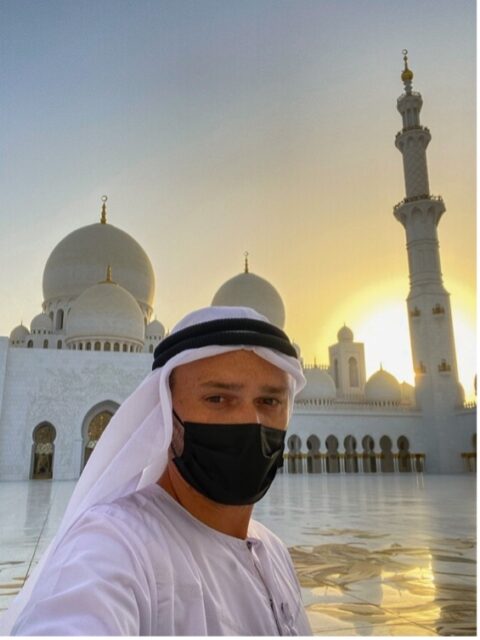
Kenny: “We really had a valuable impact on people’s daily working life. That is what I do it for. So I would certainly help out again if they decide to expand the Modern Workplace.”
Some concrete examples of that impact:
- “Thanks to the fixed document structure in SharePoint, diplomats can get to work quickly when they move to another embassy after four years, without too much onboarding time.”
- “Previously, during management meetings there was a lot of criticism about the hassle of the administrative side. After the implementation we heard many compliments about the efficiency that had been gained. We even heard that other departments were looking forward to their migration!”
- At certain embassies not everyone speaks the same language. Thanks to the automatic translation function in MS Teams they can now communicate effortlessly in their own language. That impact is enormous for people who work in a multicultural, multilingual environment.
- We made fixed templates in MS Teams for the employees of BelgiumEU, the Permanent Representation of Belgium to the European Union. Thanks to those templates, the reporting of meetings went much more smoothly. Everyone adds their part, you tag the person who has to check it and voilà. Done. They were of course very happy with that – and that is ultimately the goal of our work.”
Want to sit down together about optimising your own business workflow?
stories
More success stories


Billing information
The Flow NV
Veldkant 33A, 2550 Kontich
BE 0676.562.330